Last Minute Meth Inspection: A 2026 Buyer’s Guide to Rapid Testing

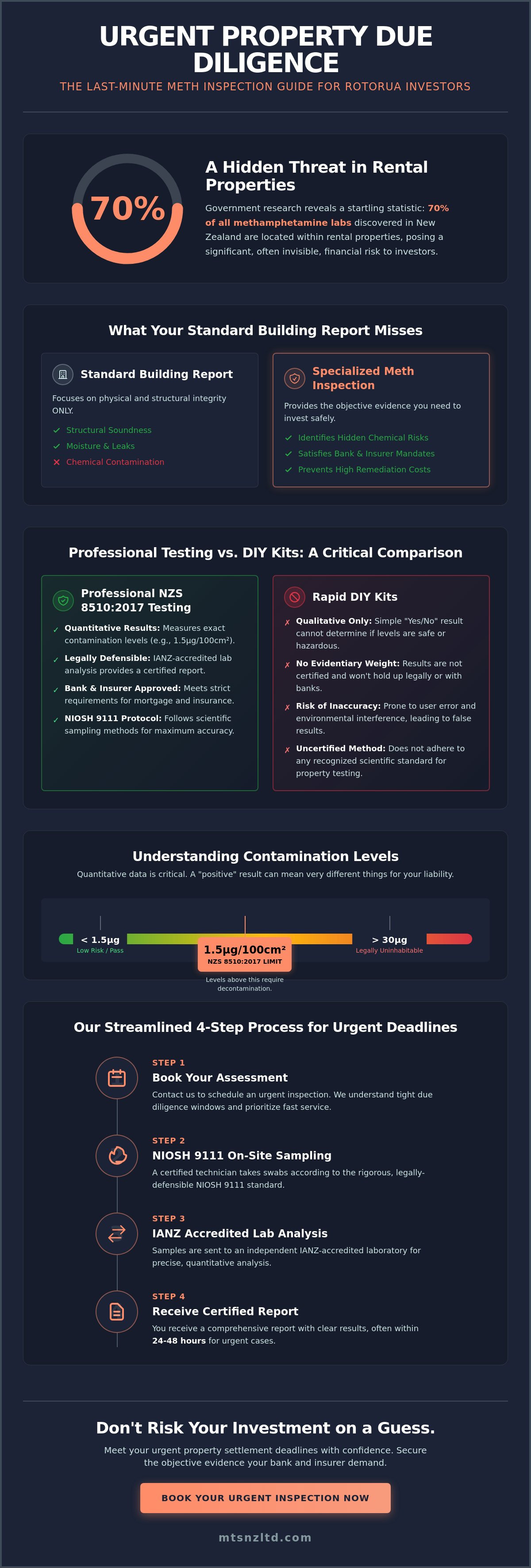
Government research indicates that 70% of methamphetamine labs discovered in New Zealand are located within rental properties (New Zealand Law Society). This data underscores the technical risk for investors, especially when facing the high pressure of a 2026 property auction. If you're currently managing a tight due diligence window, securing a last minute meth inspection is the only way to safeguard your financial commitment with objective evidence. We understand that the potential of unknowingly purchasing a contaminated property creates significant stress when settlement deadlines are approaching.
You need more than just a basic screening kit; you require technical certainty that satisfies both your bank and your insurer. This guide outlines how to obtain professional, NZS 8510:2017 compliant testing on short notice without compromising on rigorous standards. We'll examine the April 2026 residential tenancies regulations, explain why independent laboratory analysis is mandatory for risk mitigation, and show you how to receive certified results within 48 hours.
Key Takeaways
Standard building reports typically omit chemical contamination analysis, so a specialised assessment's necessary to verify property safety before purchase.
A professional last minute meth inspection provides the NZS 8510:2017 compliance that banks and insurers often mandate for mortgage approval.
Certified technicians use NIOSH 9111 sampling methods to deliver precise data that's more reliable than the results from rapid DIY kits.
You'll avoid conflicts of interest by selecting an independent tester who isn't affiliated with any decontamination or cleaning services.
Streamlined laboratory reporting provides the technical documentation you'll need to meet urgent property settlement deadlines with confidence.
Table of Contents
Why Last Minute Meth Inspections are Critical
A Baseline Screening Assessment serves as the primary technical tool for rapid property due diligence in the current market. Most standard building reports focus on structural integrity or other structural aspects e.g. geothermal effects in a place like Rotorua; however, they don't include chemical contamination analysis. Relying solely on a general inspection creates a significant blind spot for buyers. A last minute meth inspection provides the specific data required to identify hidden chemical risks before a purchase agreement becomes legally binding.
Entering an unconditional contract in the Bay of Plenty without verified data is a high-risk financial move. Government research indicates that 70% of methamphetamine labs discovered in New Zealand are found in rental properties. It's useful to understand what methamphetamine is to recognise the complexity of the residues left behind by its manufacture or use. These chemicals don't simply dissipate; they represent a potential remediation cost that can reach tens of thousands of dollars if the property exceeds the 1.5µg/100cm² limit set by NZS 8510:2017. You can book a professional assessment to mitigate this risk immediately.
The Risk of "P" Contamination in Bay of Plenty Properties
Contamination levels vary depending on whether the site was used for manufacturing or high-frequency consumption. While labs often leave visible chemical staining or odours, heavy use is frequently invisible to the naked eye. Methamphetamine residue is a persistent compound that adheres to porous building materials. GIB, ceiling tiles, and carpets absorb these particles, which then remain within the structure for years. Professional swabbing identifies these hazards where a visual inspection fails. Without this technical verification, investors risk acquiring a property that's legally uninhabitable under the 2026 Residential Tenancies regulations.
NZS 8510:2017 Standards vs. Rapid DIY Kits
Professional methamphetamine testing relies on NIOSH 9111 sampling protocols to ensure technical accuracy. Many property buyers consider over-the-counter DIY kits for a last minute meth inspection because they offer immediate visual feedback. These kits are qualitative. They only indicate presence without measuring concentration. NZS 8510:2017 requires a scientific assessment of contamination levels to determine if a property meets safety thresholds. A "yes/no" result doesn't tell you if the level is 0.5µg or 50µg, which is a critical distinction for your liability.
We don't provide DIY kits. They lack the evidentiary weight required by financial institutions. A Baseline Screening Assessment conducted by a qualified technician ensures that samples are analysed in an IANZ-accredited laboratory. This process provides a legally defensible report. For those needing to secure a mortgage or insurance coverage, this level of documentation is often a non-negotiable requirement. You can request a professional onsite assessment to ensure your data meets these regulatory standards.
The legal weight of a laboratory-certified report's significant. Under the April 2026 regulations, a property is deemed uninhabitable if levels exceed 30µg/100cm². A DIY kit cannot confirm these specific limits. Only a formal screening assessment provides the quantitative data needed to invoke tenancy termination or price renegotiation clauses. Our approach prioritises technical integrity over the convenience of uncertified instant tests.
When to Choose a Lab-Composite Test
Area-by-area composite testing involves taking multiple swabs and combining them for lab analysis. This method identifies the specific rooms affected while keeping costs manageable. In the Waikato and Bay of Plenty regions, laboratory turnaround times typically range from 3-5 days. Urgent processing can often reduce this window to 48 hours for time-sensitive transactions. This precision's necessary when initial screenings show elevated levels.
Selecting a Reliable Last-Minute Tester
When time is limited, buyers often overlook the technical qualifications of their inspector in favour of immediate availability. A valid last minute meth inspection must adhere strictly to NIOSH 9111 sampling methods. This protocol ensures that every swab taken on-site is legally defensible and scientifically accurate. You should verify that the company provides a comprehensive technical report rather than a simple verbal summary. Verbal confirmations don't hold weight with lenders or in legal proceedings. Accuracy's the priority when your investment is on the line.
The Importance of Independent Reporting
A critical factor in selecting a provider is their independence from the decontamination industry. Some firms offer both testing and remediation services, which creates a fundamental conflict of interest. Insurance companies frequently require a clear separation between these two entities to ensure results aren't biased by potential cleaning profits. By choosing an independent service model like MTS NZ Ltd, you receive objective data without the risk of inflated contamination findings. This technical distance is essential for maintaining the integrity of your property's documentation.
Booking Urgency for Auctions
The auction environment in 2026 demands rapid response times. To facilitate a fast turnaround, have the property address, access details, and your specific deadline ready before contacting a technician. Integrating this chemical analysis with a pre-purchase building inspection guide helps streamline your overall due diligence process. We recommend verifying that the technician has local regional coverage to avoid unnecessary travel delays that could jeopardise your auction timeline. Preparation prevents last-minute failures in the settlement process.
To ensure your property meets all regulatory standards before the auction date, you can book an inspection directly through our portal.
The Professional Inspection Process and Next Steps
The technical procedure for a last minute meth inspection follows a rigid sequence to ensure data integrity. Upon arrival, a technician identifies high-use areas and surfaces most likely to retain chemical residues, such as range hoods, heat pump filters, and door frames. We utilise 100cm² templates to collect samples in strict accordance with NIOSH 9111 protocols. This systematic approach ensures that every swab provides a representative measurement of the property's condition. Documentation includes a site map (for detailed tests) and photographic evidence of each sampling location to maintain a transparent chain of custody.
Results are delivered in two distinct stages. You'll receive an initial field summary shortly after the site visit, followed by a definitive laboratory report. Since the Residential Tenancies Regulations 2026 took effect on April 16, 2026, interpreting these results requires technical precision. For pre-purchase due diligence, we measure findings against the NZS 8510:2017 threshold of 1.5µg/100cm². If levels exceed the 15µg/100cm² limit established for tenancies, or the 30µg/100cm² "uninhabitable" threshold, the report provides the objective evidence needed to renegotiate or terminate a contract.
What Your Final Report Includes
A professional toxicology report provides more than just a numerical value. It includes a detailed breakdown of sample locations, laboratory analysis from an IANZ-accredited facility, and a comparison against New Zealand safety standards. This documentation is essential for demonstrating Healthy Homes Standards compliance. It serves as a permanent record for your insurance provider and future tenants, confirming that the dwelling met all health requirements at the time of the inspection.
Ready to Secure Your Property?
We provide independent, laboratory-grade screening services across the Bay of Plenty and Waikato regions. Our focus remains entirely on technical accuracy and rapid turnaround times to support your auction deadlines. If you require immediate assistance to verify a property's safety, you can Book an Inspection through our online portal. We're committed to delivering the professional data you need to protect your investment without delay.
Securing Your Property Investment with Technical Certainty
The technical integrity of your due diligence process determines the long-term security of your asset. Relying on professional, NZS 8510:2017 compliant reporting ensures that your property documentation meets the rigorous standards required by New Zealand lenders and insurers. As established in the April 16, 2026 regulations, accurate quantification is the only method to verify if a dwelling is legally habitable. It's essential to have defensible data before any unconditional commitment is made in the current market.
Choosing an independent provider for your last minute meth inspection eliminates the risks associated with "test and clean" business models. We maintain a strict focus on professional screening across the Waikato and Bay of Plenty regions; this ensures there's no conflict of interest in our results. This commitment to objective data provides the clarity you need to proceed with an auction or private sale. You can finalise your pre-purchase requirements with confidence by utilising a service that prioritises technical precision over rapid, uncertified alternatives.
Book your independent meth inspection today to ensure your investment is protected by laboratory-grade evidence. We look forward to providing the technical support your property transaction requires.
Frequently Asked Questions
How quickly can I get a meth test done?
Standard laboratory results are typically delivered within 3 to 5 working days. For urgent property transactions, a last minute meth inspection can provide next-business-day results for an additional fee if dropped off to the lab before 9AM. This expedited service ensures that buyers meet auction or settlement deadlines without compromising the technical integrity of the report. Scheduling the site visit early in the business day is the most effective way to facilitate rapid laboratory processing.
Are instant meth test results accepted by NZ insurance companies?
Instant kits are generally not accepted by New Zealand insurance providers or financial institutions for mortgage approval. These qualitative tests don't provide the quantitative data required to prove compliance with the NZS 8510:2017 standard. Insurers require a detailed report from an IANZ-accredited laboratory to confirm a property's safety status. This documentation provides the evidentiary weight necessary to secure coverage and satisfy bank lending requirements.
What is the difference between a baseline screening and a detailed assessment?
A baseline screening assessment is a cost-effective initial tool used to identify if methamphetamine residue is present above the 1.5µg/100cm² threshold. If the screening indicates elevated levels, a detailed assessment becomes necessary. This second stage involves individual swabbing of every room to determine the exact concentration and extent of the contamination. This detailed data is required to develop a precise remediation plan and calculate potential cleaning costs.
Does a standard building report cover methamphetamine testing?
A standard pre-purchase building report focuses on structural integrity and moisture levels but excludes chemical contamination checks. Methamphetamine testing requires specialised swabbing and laboratory analysis that aren't included in the NZS 4306:2005 building inspection standard. Buyers must specifically request a last minute meth inspection to ensure this chemical risk is assessed alongside the physical condition of the dwelling before the contract becomes unconditional.
What happens if a property tests positive for meth?
The required actions depend on the specific concentration levels recorded in the laboratory report. If findings exceed the 1.5µg/100cm² guideline or the 15µg/100cm² tenancy limit, professional decontamination is usually recommended. Under the April 16, 2026 regulations, a property is legally uninhabitable if levels surpass 30µg/100cm². These results provide the objective evidence needed to renegotiate the purchase price or terminate an agreement based on the projected remediation expenses.


Comments